
What is an AEMPS cannabis licence and who can obtain one?
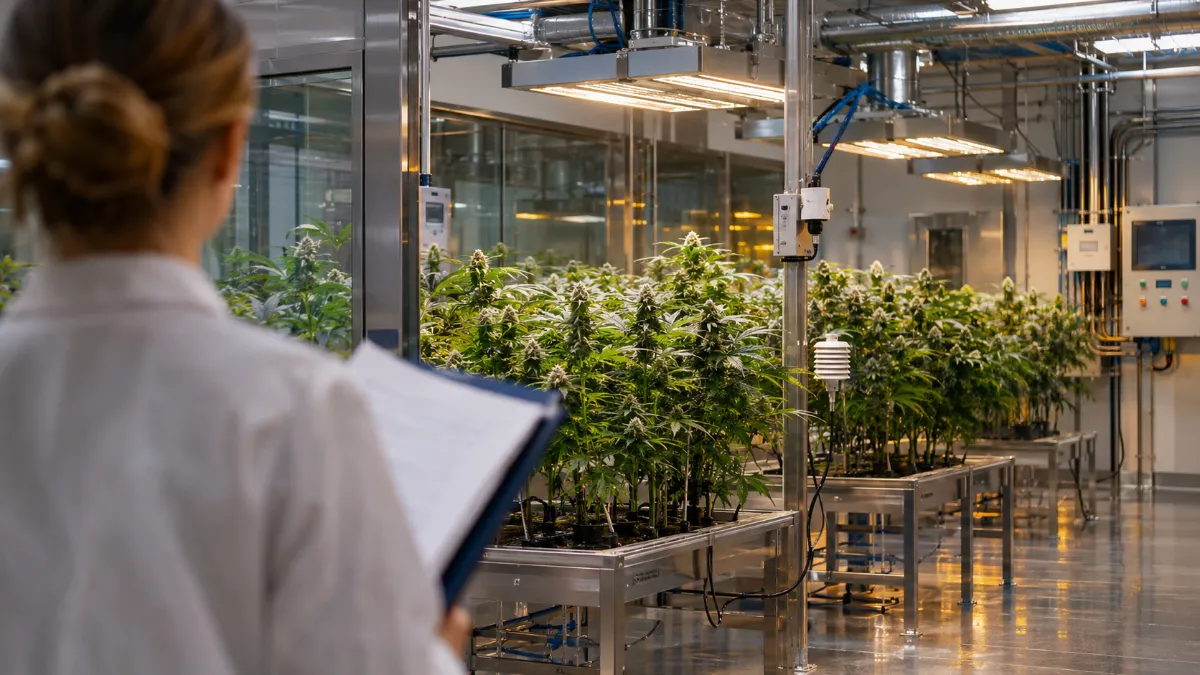
In Spain, any cultivation of cannabis plants not exclusively intended for industrial hemp fibre, grain or seed requires prior authorisation from the Spanish Agency of Medicines and Medical Devices (AEMPS), under Article 8 of Law 17/1967 on narcotic drugs. The AEMPS grants cultivation authorisations for medical purposes, for research purposes, to produce seeds and cuttings, to validate active ingredient batches, and for clinical trials. Applications must be filed by a company with a suitable corporate purpose, not by an individual, and the application file requires a technical report, lawful origin of the plant material, identified premises, a contract and risk assessment from a security company, and a complete chain of custody through to the end client. Cultivation does not permit processing: extracting, packaging or labelling additionally requires a manufacturing authorisation for narcotic drugs. Since the Royal Decree 903/2025, the domestic route runs through standardised preparations registered with the AEMPS and dispensed at hospital pharmacies.
Few expressions generate as many mistaken expectations as medicinal cannabis licence. Some imagine a permit that can simply be bought, others believe owning a plot of land is enough, and others think Royal Decree 903/2025 opened the door to any project. The reality is more demanding, and also more predictable for those who understand it: the AEMPS cannabis licence is an administrative authorisation tied to a specific holder, specific premises, and a project with a clearly defined destination. In this guide, we explain what types exist, what documentation the AEMPS requires, how the new medicinal cannabis framework fits in, and which mistakes most often stall applications, drawing on the experience of Gabriela Sierra, a lawyer specialising in cannabis regulatory affairs.
The legal starting point: why cannabis requires authorisation
Cannabis is included in Schedule I of the 1961 Single Convention on Narcotic Drugs, which Spain ratified in 1966. The Convention defines cannabis as the flowering or fruiting tops of the plant, regardless of THC content, and requires States to limit its production, trade and possession to medical and scientific purposes. Law 17/1967, of 8 April, transposes that obligation into Spanish law: Article 8 requires prior authorisation to cultivate plants from which narcotic drugs may be obtained, and the power to grant it now lies with the AEMPS, through its Department of Medicines Inspection and Control.
The only significant exception is industrial hemp: cultivation of varieties listed in the European common catalogue intended exclusively for fibre, grain or seed falls outside AEMPS authorisation, provided it meets its own conditions. We cover this in detail in our guide on growing industrial hemp in Spain. As soon as the aim is the flower, cannabinoids, or a pharmaceutical use, the project falls squarely within the narcotic drugs regime, even if the variety has low THC content. We explore this boundary, which confuses many CBD businesses, in legal differences between CBD, THC and hemp.
One in every two applications ends in authorisation
Since 2018, the AEMPS has received 413 cultivation applications and authorised 224 applications, covering production for medical and research purposes. In 2025, there were 29 authorised entities, more than double the number in 2021.
This figure disproves two ideas at once: that the licence is impossible to obtain, and that it is a mere formality. Nearly half of all projects fail to secure authorisation, and the usual cause lies within the application file itself.
Source: AEMPS data compiled by Interempresas (2025). The AEMPS publishes the list of current authorisations on its website.
Types of cultivation authorisation granted by the AEMPS
Speaking of “the licence” in the singular is inaccurate. The list of current authorisations published by the AEMPS distinguishes between several purposes, and each one dictates what the holder can do with what they grow.
For medical purposes
Cultivation to obtain cannabis intended for medicines, active ingredients or intermediate products. This is the authorisation that requires the most complete pharmaceutical chain of custody.
For scientific purposes
Agronomic, genetic or analytical R&D projects. The resulting material may not be administered to people, and its intended use must be justified in the project report.
Seeds and cuttings
Authorisations to produce starting material for medical or scientific purposes, which is then supplied to other authorised holders with full traceability.
In addition, there are two more specific cases that also appear in the official list: cultivation to obtain validation batches for an active ingredient’s manufacturing process, and cultivation linked to the preparation of a clinical trial. Choosing the wrong purpose is a foundational mistake: it determines the technical report, the contracts that must be submitted, and what can be done with the harvest.
“Many projects arrive at the firm with the warehouse already leased and the wrong question in mind: how do I get the licence? The question the AEMPS actually asks is different: who is going to receive what you grow, and under what authorisation? If that answer isn’t signed and sealed, everything else is just decoration.”
Cultivation authorisations, side by side
| Purpose | What it permits | Key component of the file | Destination of the harvest |
|---|---|---|---|
| Medical purposes | Cultivating to obtain cannabis intended for medicines, active substances, or intermediate products | Contract with authorised manufacturer and final client; justification of quantities | Authorised pharmaceutical chain, domestic or export |
| Research | Agronomic, genetic, or analytical R&D projects | Scientific report with objectives, methodology, and timeline | Exclusive use within the project; never for administration to humans |
| Seeds and cuttings | Producing plant material for medical or scientific purposes | Lawful origin of varieties and list of recipient holders | Other authorised holders, with full traceability |
| Validation batches | Obtaining the batches necessary to validate an active substance manufacturing process | Link to the manufacturer and their process | Process validation, not commercialisation |
| Clinical trial | Cultivation linked to the preparation of a clinical trial | Relationship with the sponsor and the trial design | The trial itself, under authorised conditions |
Summary prepared by Lawyer Sierra based on the list of current authorisations and the AEMPS application form.
What the AEMPS requires: the application file, section by section

The official application form for authorisation to cultivate plants that may produce narcotic drugs for medical purposes is organised into twelve sections. What matters is what lies behind each box: almost all of them require documented justification, and that is where applications are most often sent back.
The application must be accompanied by proof of payment of fee 6.08 under the consolidated text of the Law on Guarantees and Rational Use of Medicines (Royal Legislative Decree 1/2015) and is filed through the AEMPS electronic office.
Applicant and corporate purpose
Deed of incorporation and registration with the Commercial Registry. The corporate purpose must expressly cover the activities applied for, and if acting through a representative, their power of attorney.
Technical project report
Objectives, methodology, work plan and timeline, and a description of what each participating entity does, with those responsible and the full operational workflow.
Lawful origin of the material
Varieties listed in the EU common catalogue or authorisation from the competent authority, a justified quantity of seeds or cuttings, and a contract with an authorised supplier.
Production forecast
Projected grams of each product (flowering tops, seeds, extract, resin), its purpose, and its classification: medicine, active ingredient, or substance for research use only.
Identified premises
Land registry details, surface area and density, number of plants and justified annual cycles, a scale drawing, ownership or a contract with the owner. For soil cultivation, an agricultural suitability certificate.
Demonstrated security
Description of the measures in place, a contract with the security company, and a risk assessment report confirming their suitability, covering cultivation, post-harvest handling and manufacturing.
Chain of custody
Authorised manufacturer, intermediaries and end client, with contracts setting out activities and responsibilities, and documentation proving that each party can carry out what is planned.
Resources and collaborators
Material and human resources, with their suitability and the team’s CVs. If the grower is not the applicant, a contract and a written commitment to deliver the entire harvest.
“The word that comes up most often in the AEMPS form is justification. How many plants, why those ones, why those cycles, why those grams. Every figure must be defensible with a contract or a technical calculation. When a figure is included \”just in case\”, the Agency picks up on it, and it’s usually the first thing they ask to be clarified.”
Security, built into the application file, not added afterwards
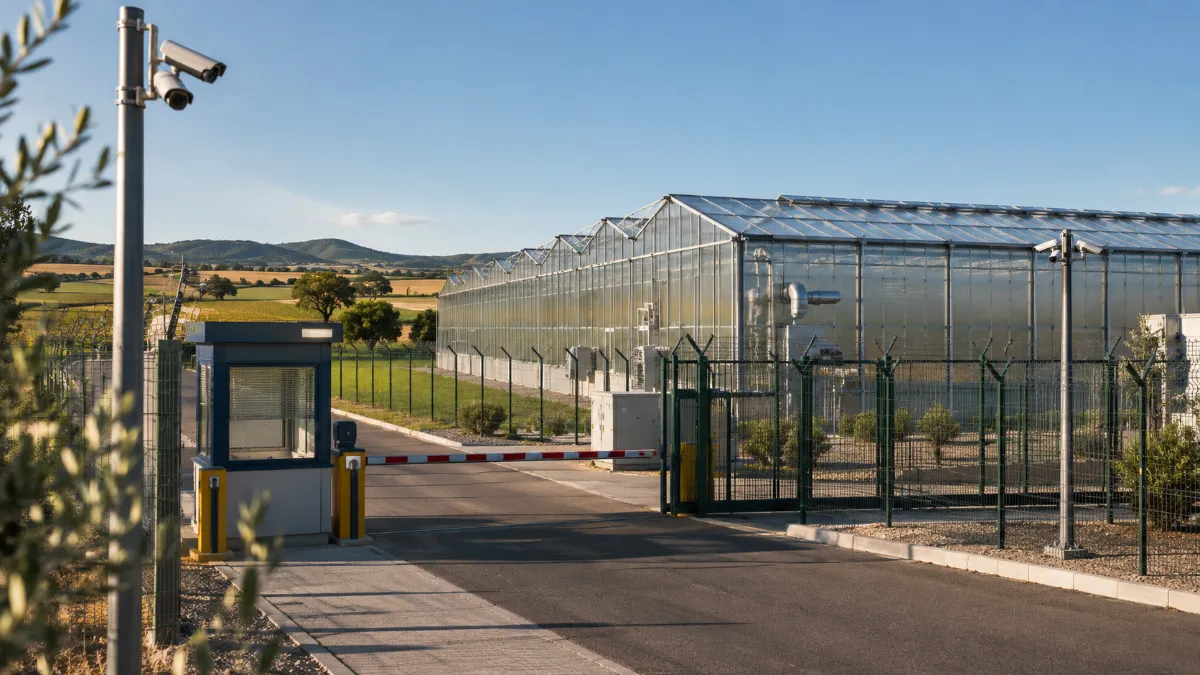
The security section is the one promoters most often underestimate. The AEMPS does not accept a generic description: it requires the contract with the security services provider and a risk assessment report prepared by that provider confirming that the measures are suitable. The same requirement applies to every facility where narcotic substances are present: cultivation, post-harvest handling and manufacturing. In practice, this means security must be designed alongside the facility itself, since a poorly planned perimeter or access route may require the plans to be redone.
Cultivating is not manufacturing: the second authorisation almost no one plans for
One of the costliest mistakes is assuming that a cultivation authorisation allows the holder to do “something” with the harvest. The AEMPS form warns of this in a footnote: processing, extraction and labelling require a manufacturing authorisation for narcotic substances or medicines. That is why the cultivation application itself requires identifying the authorised manufacturer and submitting the contract with them.
What the cultivation authorisation covers
- Germination, mother plants, cuttings, rooting and flowering.
- Separation of flowering or fruiting tops.
- The operations described in the project report and in the identified premises.
- Delivery of the entire harvest to the authorised recipients listed in the application file.
What requires a manufacturing authorisation
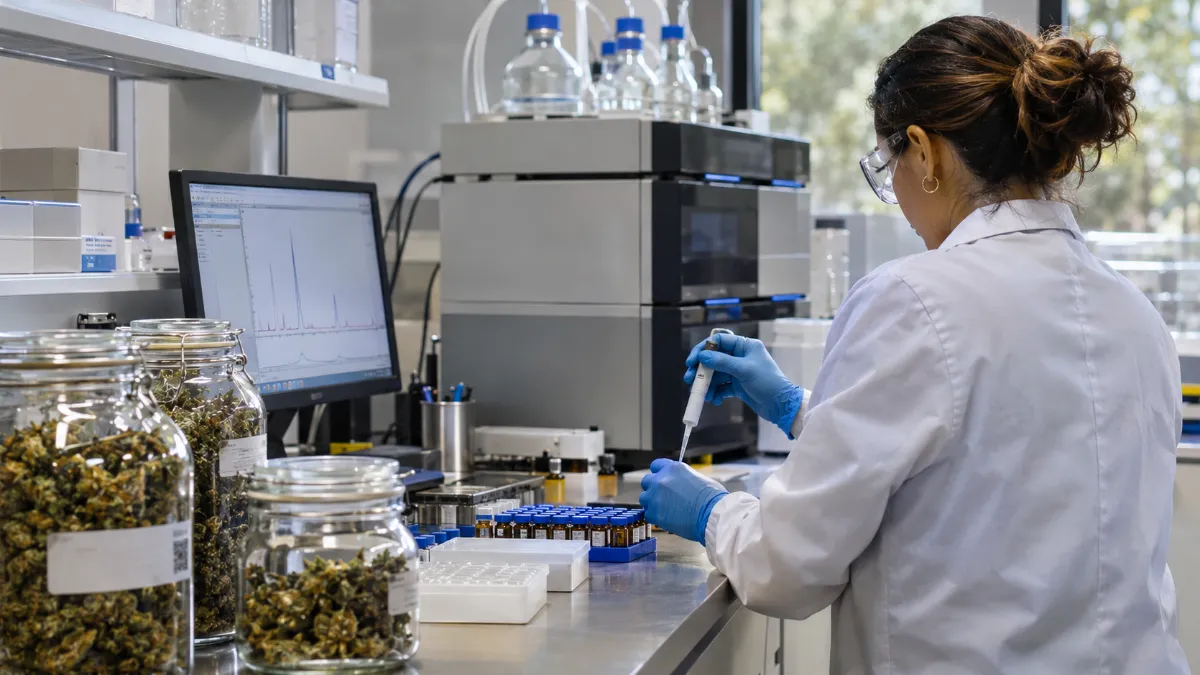
- Physical processing for pharmaceutical use, drying and packaging as set out in the project.
- Extraction of cannabinoids, resins or tinctures.
- Labelling, quality control and batch release under good manufacturing practice (GMP) standards.
- Manufacture of the standardised preparations provided for in Royal Decree 903/2025.
How Royal Decree 903/2025 fits into a cultivation project
Royal Decree 903/2025, of 7 October, in force since 10 October 2025, regulates the medicinal use of cannabis in Spain for the first time through standardised compounded formulas prepared from standardised cannabis preparations. Its logic is pharmaceutical from start to finish, and it is worth understanding before designing any project aimed at the national market. We look at this in depth in medicinal cannabis in Spain: how Royal Decree 903/2025 works; here we are interested in the supply chain.
Authorised cultivation
AEMPS authorisation to cultivate for medical purposes, with an identified destination.
GMP manufacturing
Pharmaceutical laboratory with a manufacturing authorisation for narcotic drugs.
Registration of preparations
Registration of the standardised preparation in the AEMPS register (Article 6, RD 903/2025).
Compounded formulation
Prepared by the hospital pharmacy department according to the National Formulary monograph.
Prescription and dispensing
By a specialist physician, within the hospital setting, with patient follow-up.
Three practical consequences. First: the Royal Decree does not create a new cultivation licence; AEMPS authorisation under Law 17/1967 is still required. Second: it is a pharmaceutical laboratory that registers the preparation, and it must comply with good manufacturing practice and good distribution practice standards (Articles 5 and 6); the AEMPS published the registration procedure in January 2026, which is processed through its electronic register. Third: use is confined to the hospital setting, meaning the end client of the domestic chain is neither a shop nor an association.
“After October 2025, we received a lot of calls with the same excitement: now it’s possible. And it is, but within a very specific pharmaceutical circuit. The projects that succeed are the ones that quickly understand which link of the chain they want to be in, cultivation, manufacturing or research, and who they’re going to partner with for the rest.”
The process, from idea to authorisation
Regulatory design
Purpose, link in the chain, partners and recipients. Review of the corporate purpose and company structure.
Contracts and site
Plant material supplier, manufacturer, end client, ownership of the plots and security company.
Application file and fee
Technical report, justification of quantities, plans, risk assessment report and payment of fee 6.08.
Evaluation and inspection
Requests for further information from the AEMPS, corrections and, where applicable, inspection by the Inspection and Control Department.
Authorisation does not close anything: it opens up ongoing obligations around narcotic drugs accounting, traceability, reporting changes and inspections.
The obligations that begin the day authorisation is granted
Once granted, the authorisation operates alongside a regime of ongoing control. The most visible is the narcotic drugs accounting ledger under Article 20 of Royal Decree 1675/2012: every movement of cannabis is recorded at the time it occurs, in grams, with separate sheets for fresh and dried cannabis, and the declared stock must match the actual stock. Harvests, samples sent to the laboratory, transfers for drying, shipments, losses and destructions are all movements that must be recorded. The ledger may be kept electronically if it meets the security, integrity and traceability requirements of Article 21 and is validated by the health authority.
- Internal accounting and traceability. In addition to the official ledger, the AEMPS requires a detailed internal record of movements between rooms or areas within the same facility, which are not entered in the ledger but must be fully traceable.
- Validity and renewal. According to information provided by the Government to Congress, cultivation authorisations have generally been renewed annually, so compliance in one year affects the next.
- Changes that must be reported. The authorisation is tied to a specific holder, specific premises and a specific project. Expanding the growing area, or changing variety, manufacturer or recipient, is not an internal decision: it must be processed with the Agency.
- Inspection and criminal risk. Authorised activities are subject to inspection. Stepping outside the authorised scope can cease to be an administrative infringement and fall within the scope of Article 368 of the Criminal Code, as we explain in preventing criminal risk in cannabis.
The mistakes that most often stall an application
From what we see when reviewing projects before submission, these are the failures that most often result in requests for clarification or a refusal. None are technical in an agronomic sense: almost all are related to the project’s approach.
No signed client
Reports that describe a potential market but do not provide a contract with a manufacturer or an authorised final client.
Unjustified production
Plants, cycles, and grams that do not stem from contracted demand, but from an aspiration for growth.
Insufficient corporate purpose
Companies incorporated for another activity that do not cover the cultivation or manufacture of narcotic drugs.
Unevaluated risks
Generic security descriptions without a contract with an authorised company or a risk assessment report.
Exporting medicinal cannabis: the other half of the project
Many Spanish projects are born with an export focus, because the domestic market is limited to the hospital circuit under Royal Decree 903/2025. It is worth knowing from the start that, in accordance with the 1961 Convention, each import or export of narcotic drugs requires specific permits from the authorities of both the country of origin and the country of destination, and that the product must meet the pharmaceutical requirements of the target market. This is why the foreign client and their authorisation are part of the file from day one, just like the manufacturer.
Five misconceptions about the licence that don’t hold up
“An AEMPS licence can be bought or transferred like an asset.”
It is a personal administrative authorisation, tied to its holder, specific premises and a specific project. A corporate transaction or a change of premises requires reviewing how it fits with the Agency.
“With low THC, I don’t need the AEMPS.”
The Convention defines cannabis without regard to THC content. If the aim is the flower or the cannabinoids, authorisation is required, even if the variety is hemp.
“An individual can apply for one to treat their own illness.”
The system is designed for entities with a suitable corporate purpose, resources and a pharmaceutical chain of custody. Applications for therapeutic self-cultivation submitted by individuals have been denied by the AEMPS.
“RD 903/2025 allows medicinal cannabis to be sold in high-street pharmacies.”
It regulates compounded formulations made from registered preparations, prepared and dispensed in the hospital setting on a specialist’s prescription.

What we review before filing an application
At Lawyer Sierra, we approach every project with a prior regulatory review: purpose and chain link, company structure and corporate purpose, contracts with the supplier, manufacturer and recipients, consistency between the project report, production figures and premises, and the model’s criminal risk exposure. The goal is for the application file to reach the Agency complete and defensible, with no figures that cannot be justified.
If your project is at that stage, you can see how we work in regulatory affairs for medicinal cannabis.
What we see at Lawyer Sierra
“Promoters arrive with a very thorough international market study and not a single signed contract. The AEMPS does not evaluate business opportunities: it evaluates a specific chain, with names and authorisations.”
“Before drafting a single page of the file, we map out the entire project chain on one sheet: who cultivates, who manufactures, who buys and under what authorisation. If the map has gaps, the file will too.”
Practical recommendations before starting
- Start with the destination. Before looking for land, identify who will receive the crop and under what authorisation. Without that contract, the rest of the application file cannot stand.
- Review the corporate purpose. A company incorporated for the “trade of natural products” does not cover the cultivation of narcotic substances. Amending it beforehand prevents official requests for clarification.
- Justify every figure. Plants, cycles, surface area, and grams must derive from a technical calculation linked to contracted demand, not mere aspiration.
- Integrate security into the design. Retain the security company early: their risk assessment report may alter the facility layout.
- Anticipate manufacturing authorisation. If you intend to dry for pharmaceutical purposes, extract, or package, you will need an authorised manufacturer or your own manufacturing authorisation.
- Set up accounting from day one. The narcotics register and internal traceability are also your best defence during an inspection.
Quick checklist for a solid application file
- Authorisation purpose defined (medicinal, research, plant material, validation, or testing).
- Deed of incorporation and company registration with a corporate purpose covering the activities.
- Technical report with schedule and assigned personnel per task.
- Lawful origin of plant material and contract with an authorised supplier.
- Production forecast in grams, specifying the destination of each product.
- Plots with cadastral details, scale plans, and proof of title.
- Security contract and facility-specific risk assessment report.
- Contracts with manufacturer, intermediaries, and end client.
- Proof of payment of fee 6.08.
Frequently asked questions about the AEMPS cannabis licence
Which body grants the licence to cultivate medicinal cannabis in Spain?
The Spanish Agency of Medicines and Medical Devices (AEMPS), through its Department of Inspection and Control of Medicines, in accordance with Article 8 of Law 17/1967 on Narcotic Drugs. The AEMPS publishes the list of valid cultivation authorisations on its website.
Can an individual obtain an AEMPS licence to cultivate cannabis?
The regulatory framework is designed for legal entities with an adequate corporate purpose, technical resources, and a pharmaceutical or scientific supply chain. Applications for personal cultivation for therapeutic purposes submitted by individuals have been refused by the AEMPS.
What documentation must be submitted to apply for the authorisation?
Proof of payment of fee 6.08, the company deed, a technical project report, accreditation of the lawful origin of seeds or cuttings, a substantiated production forecast, details and plans of the facilities, security measures including the contract and risk report from the security company, and contracts with the manufacturer, intermediaries, and end client.
Does the cultivation licence allow oil extraction or product manufacturing?
No. Processing for pharmaceutical purposes, extraction, packaging, and labelling require a manufacturing authorisation for narcotic substances or medicinal products, which is distinct from a cultivation licence. For this reason, the cultivation application requires identifying the authorised manufacturer and submitting the contract executed with them.
Does Royal Decree 903/2025 alter the procedure for obtaining a licence?
It does not create a new cultivation licence. It regulates standardised magistral formulae for cannabis preparations, creates a register of preparations within the AEMPS for pharmaceutical laboratories, and restricts their use to the hospital setting. Cultivation continues to require authorisation pursuant to Law 17/1967.
Do I need an AEMPS licence to cultivate hemp for CBD?
Yes, if the intended purpose is the flower or cannabinoid extraction. Only the cultivation of registered hemp varieties intended exclusively for fibre, grain, or seed falls outside AEMPS authorisation, provided it complies with agricultural regulatory conditions.
What obligations does an authorised licence holder have?
Maintaining an up-to-date narcotics register (Article 20 of Royal Decree 1675/2012), ensuring complete internal traceability, notifying relevant project modifications, submitting to inspections, and renewing the authorisation under the terms established by the Agency.

Gabriela Sierra Fontecilla
Lawyer admitted to the ICAB and specialising in cannabis law since 2012. Lecturer on the Cannabis Master’s Degree at CannabisHub with the University of Barcelona. She assists medicinal cannabis and research projects with their regulatory strategy before the AEMPS.
Meet Gabriela Sierra →What this article is and is not
It is general legal information concerning the regulatory regime for cannabis cultivation authorisations in Spain as of November 2026, prepared on the basis of Law 17/1967, Royal Decree 1675/2012, Royal Decree 903/2025, and official guidance published by the AEMPS.
It does not constitute legal advice nor does it create a lawyer-client relationship. Every project has a distinct purpose, corporate structure, and partners, and the AEMPS assesses each application file on its overall merits. Before committing capital or filing an application, you should have a professional review your specific case.
It does not promote cannabis consumption. It outlines the regulatory framework governing activities for medicinal and scientific purposes, which are the only activities permitted under the legal system. If you require guidance regarding your project, Lawyer Sierra can assess it with you.
Before the premises, the application file. Let us discuss your project.
At Lawyer Sierra, we advise medicinal cannabis and research projects on regulatory design, supply chain contracts, and dossier preparation before the AEMPS, providing a straightforward assessment of compliance risks.
Inquiries answered within a maximum of 48 hours. Office at Av. Diagonal, 534, Barcelona (by appointment) and services provided throughout Spain.
Sources consulted
- Single Convention on Narcotic Drugs of 1961 (United Nations), Articles 1, 23, and 28.
- Law 17/1967, of 8 April, updating the applicable regulations on narcotic drugs, Articles 8 and 9.
- Royal Decree 1675/2012, of 14 December, official prescriptions and special requirements for prescribing and dispensing narcotic drugs, Articles 20 and 21.
- Royal Decree 903/2025, of 7 October (BOE-A-2025-20077), standardised magistral formulae for cannabis preparations.
- AEMPS: application form for authorisation to cultivate plants capable of producing narcotics for medicinal purposes; list of valid authorisations for cultivating cannabis plants; guidance on the narcotics register regarding cannabis; informative note MUH 02/2026 on the Register of Standardised Cannabis Preparations.
- Interempresas (2025), “The challenge of turning medicinal cannabis regulation into real access”: cultivation applications and authorisations since 2018.