
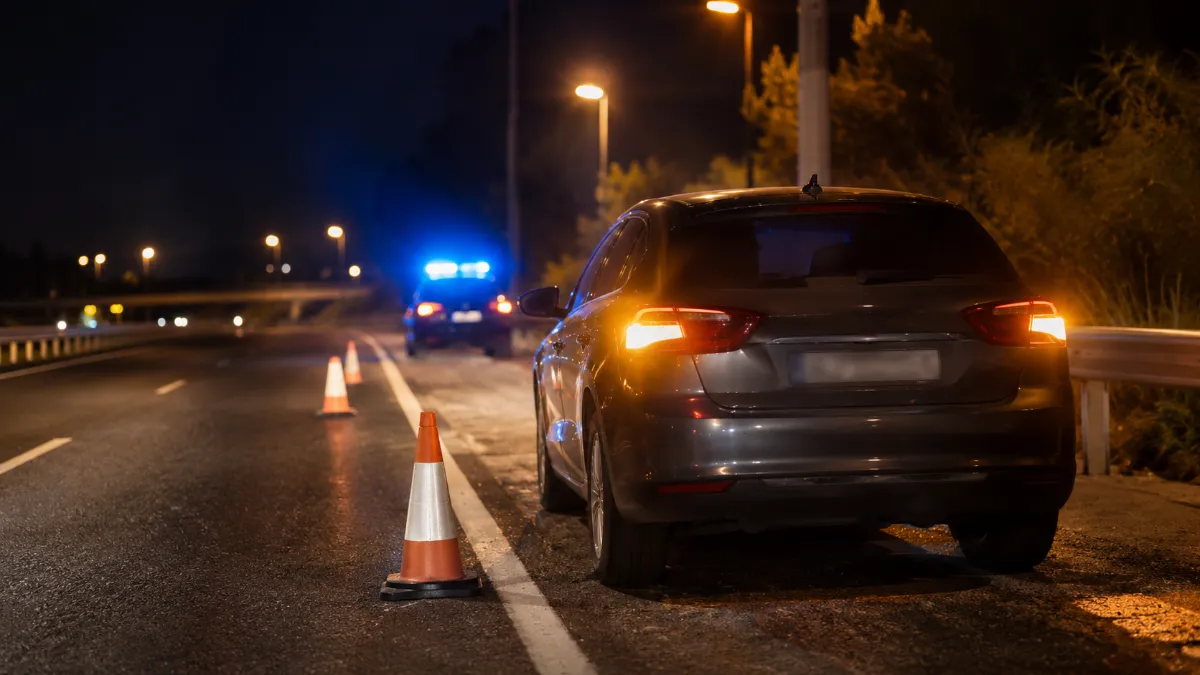
Is it worth appealing a roadside drug test fine?
Driving with drugs present in your system is a very serious offense (articles 14 and 77.c of the Spanish Traffic Act) punished with a €1,000 fine and the loss of 6 points. If you pay within the 20 calendar days following notification, the fine drops to €500, but you waive your right to submit objections and still lose the points. Appealing is worthwhile when there is a specific ground: the confirmatory laboratory analysis of the saliva sample was not carried out, there were chain of custody failures, you were not informed of your right to a confirmatory blood test, the positive result is due to a prescribed medicine taken for therapeutic purposes, or there are defects in notification, statute of limitations or time limits. If the file is correct, appealing only drags the procedure out. That is why the first step is to request and review the complete file.
Every week some version of the same inquiry reaches our office: “I was stopped, I tested positive on the roadside drug test, I’ve received a €1,000 fine and six points, and I wasn’t high.” Sometimes it is consumption from days earlier, sometimes a CBD product, sometimes a medical treatment. The question is always whether it is worth appealing the drug test fine or whether it is better to pay with the discount. In this guide we explain how the procedure works, what deadlines you have, when an appeal has a real chance and when it does not, drawing on the experience of Gabriela Sierra, a lawyer specializing in cannabis law.
What exactly is penalized: presence, not influence
Article 14 of the Spanish Traffic, Motor Vehicle and Road Safety Act (Royal Legislative Decree 6/2015) prohibits driving with drugs present in the body, without requiring the substance to affect driving. It is enough for it to be detected. The courts have upheld this way of defining the offense, which article 77.c classifies as very serious and which is punished with a €1,000 fine and the deduction of six points from the license.
Driving under the influence of drugs is a different matter: it is a crime under article 379.2 of the Spanish Criminal Code and requires proof that the substance impaired the driver’s faculties (symptoms, erratic driving, officers’ report). And refusing to take the test is something else again, which can be a crime under article 383 of the Criminal Code. This article deals with the administrative route, the one that leads to the fine.
Presence of drugs
Articles 14 and 77.c of the Traffic Act. €1,000 and loss of 6 points. A confirmed positive result is enough.
Driving under the influence
Article 379.2 of the Criminal Code. Three to six months in prison, a fine or community service, and loss of the license for one to four years.
Refusing the test
Article 383 of the Criminal Code. Refusing the legally established tests may be a crime, with more serious consequences than the fine itself.
How the test works: screening, confirmatory and contrasting tests
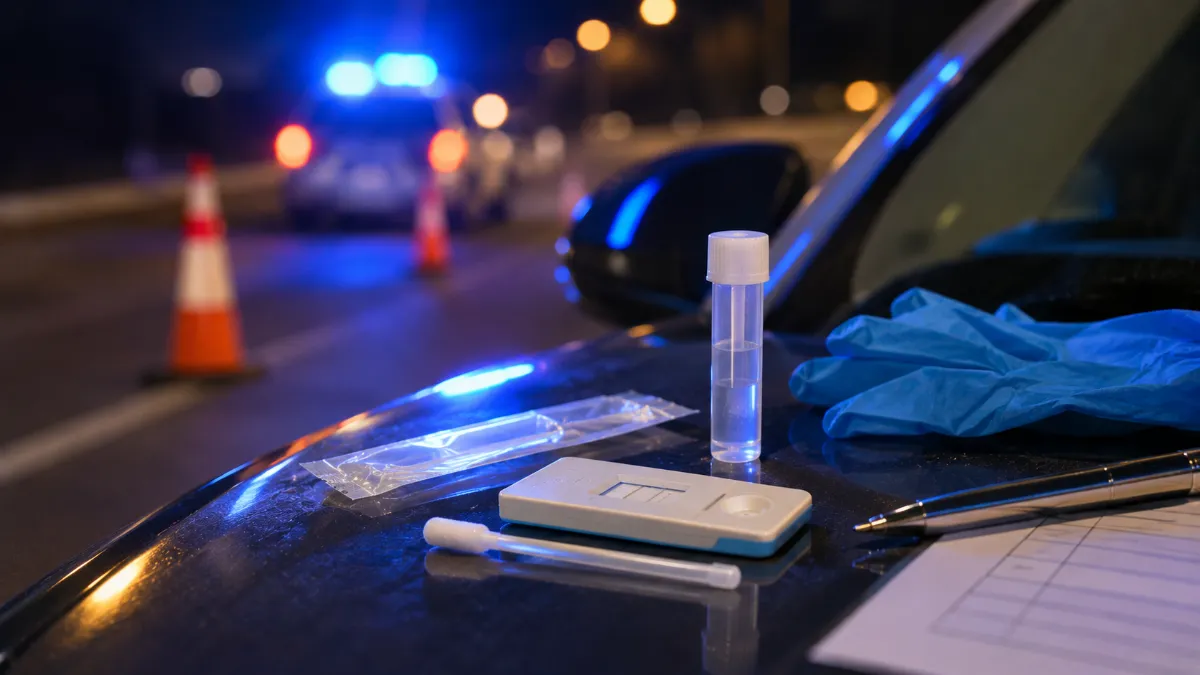
The Traffic Act provides for a saliva test with an approved device at the checkpoint and a subsequent analysis of a saliva sample of sufficient quantity, which is sent to a laboratory. The roadside test is a screening test; the result that supports the fine is the laboratory analysis.
In addition, the driver may request a contrasting test, which will preferably consist of a blood test, except for justified exceptional reasons. If the result confirms the positive, the driver bears the cost.
“Most of the people who consult me did not know they could request a blood test on the spot, or were discouraged from doing so because of the cost. It is a right worth knowing before anyone stops you, because afterwards it cannot be repeated. And when we review files, one of the first things we check is whether the file shows that you were informed of that right and whether the laboratory analysis of the second sample exists.”
The deadlines to watch from the date of notification
To pay with a 50 % reduction or to submit objections and propose evidence.
For the optional administrative appeal (recurso de reposición) against the penalty decision.
For a judicial appeal before the administrative court.
Statute of limitations for very serious traffic offenses (article 112).

The critical point is those first 20 calendar days. During that period you can choose between voluntary payment with a discount or objections, but not both. Reduced payment ends the procedure, means waiving your right to object and does not prevent the loss of the six points, although the law leaves the judicial route open. If you object and the authorities agree with you, the file is closed; if not, you will receive a decision that can be challenged through an administrative or judicial appeal.
“My honest advice is this: don’t pay on the first day out of fear, and don’t appeal out of pride. Request the file, look at what evidence there is and decide based on the facts. Some files have clear defects and others are flawless. Paying a defective file with the discount is throwing away money and points; appealing a flawless one is prolonging the uncertainty only to end up in the same place.”
The penalty procedure, step by step
Screening test and second sample
Saliva test at the scene and collection of a second saliva sample for laboratory analysis. This is the moment to request, if you wish, the contrasting blood test.
Laboratory result and notification
If the analysis confirms the presence, the offense is notified. The 20 calendar days run from that day.
Pay with the discount or object
Reduced payment ends the procedure; objections open the debate on the evidence and the file.
Penalty or dismissal
The authorities decide in light of the objections. If they impose a penalty, the decision indicates the available appeals.
Administrative and judicial appeals
Optional administrative appeal within one month or judicial appeal within two months before the administrative court.
Payment and point deduction
When the penalty becomes final, payment is enforced and the six points are deducted from the license.
When an appeal makes sense: the grounds that work
An appeal is not an opinion on how unfair the fine is: it is a legal argument supported by the file. These are the grounds that, based on what we see in our practice, can succeed when they are proven.
No confirmatory analysis
If the file only contains the roadside screening test and not the laboratory analysis of the second saliva sample, the evidence required by law is missing.
Chain of custody
Samples not properly identified, unsealed, or with gaps in their transport and receipt at the laboratory.
Right to a contrasting test not explained
If there is no record that you were informed of your right to a contrasting blood test, or you were prevented from taking it.
Prescribed medication
The law exempts substances used under medical prescription and for therapeutic purposes, provided the driver is fit to drive. This must be proven with medical documentation.
Device and procedure
Use of an unapproved device, an insufficient sample or results that do not identify the substance or the amount detected.
Notification, statute of limitations and time limits
Defective notifications, a time-barred offense or a procedure that expired because the deadline for deciding was exceeded.
What if I tested positive because I took CBD?
Some CBD products contain traces of THC and can produce a positive result. The problem is that the offense is based on the presence of THC, not on intent, so arguing “I only took CBD” is not enough on its own. It can, however, be relevant when requesting and assessing the contrasting test or the laboratory analysis. We explain this in detail in what happens if the police stop you with CBD: flowers, oils and drug tests, and the legal boundary between the two cannabinoids in legal differences between CBD, THC and hemp.
“With medical cannabis regulated since 2025, we will see more and more patients on prescribed treatments who drive. The therapeutic exception exists, but you have to be able to prove it: a prescription, a medical report and evidence that the person was fit to drive. If you are on treatment, carry the documentation with you. It is the difference between explaining your situation at the checkpoint or doing so months later in an appeal.”
Appeal or pay? A guide to help you decide
There is a provable defect
The laboratory analysis is missing, there are gaps in the chain of custody, you were not told about the contrasting test, there is a medical prescription or there are problems with notification, statute of limitations or time limits.
Doubts about the evidence
Unclear results, use of CBD products or consumption long before the test. It is worth reviewing the file before deciding, always within the 20 days.
Correct file
Screening and confirmatory tests in order, information on rights documented and correct notification. Appealing does not change the outcome and you give up the discount.
When deciding, it also helps to consider what does not appear on the fine: the six points (and their effect if you have already lost others), possible repeat offending, the impact on your work if you drive for a living and, if there were symptoms of impairment, the risk of the case moving to the criminal route. If you have been arrested or investigated for other cannabis-related matters, the route changes completely and your rights become the priority, as we explain in what to do if you are arrested with cannabis.

Four ideas about drug tests that need correcting
“If I wasn’t impaired, they can’t fine me.”
The administrative offense is based on the presence of the substance, not on impairment. Influence matters for the crime, not for the fine.
“If I pay with the discount, I keep my points.”
Reduced payment cuts the amount in half, but the six points are lost anyway and you waive your right to object.
“The best thing is to refuse the test.”
Refusing the tests can be a crime under article 383 of the Criminal Code, with much more serious consequences than the fine.
“All drug test appeals are won on procedural defects.”
The ones that succeed are those based on a real defect in the file. Promising otherwise means not knowing the case.
What we see at Lawyer Sierra
“People who pay with the discount on the same day out of fear and later find out that the file had a clear defect. Reviewing does not oblige you to appeal; it lets you decide with information.”
“Keep the notification and the envelope, write down the date you received it and don’t throw away any paperwork from the checkpoint. With those three things we can assess the case very quickly.”
Recommendations if you receive a drug test fine
- Write down the notification date. The 20 calendar days start counting from that day, not from the checkpoint.
- Request the complete file. The test report, the laboratory analysis result and the chain of custody documentation.
- Gather your medical documentation. If you take a prescribed medicine, the prescription and reports. If you use CBD, the product and its analysis.
- Don’t pay on autopilot or appeal out of anger. Decide once you know what is in the file.
- Respect the deadlines for each stage. Objections, administrative appeals and judicial appeals have different deadlines that cannot be recovered.
- Know your rights at the checkpoint. You can request a contrasting blood test. If you are on treatment, carry the documentation.
Frequently asked questions about drug test fines
How much is the fine for testing positive for drugs while driving?
Driving with drugs present in the body is a very serious offense punished with a €1,000 fine and the loss of 6 points from the driving license (articles 14 and 77.c of the Traffic Act). If paid within the 20 calendar days following notification, the fine is reduced to €500, but the points are still lost.
Is it worth appealing a drug test fine?
It is worthwhile when there is a specific, provable ground: no confirmatory laboratory analysis, chain of custody defects, failure to inform you of the right to a contrasting test, medication prescribed for therapeutic purposes, or defects in notification, statute of limitations or time limits. If the file is correct, appealing does not usually change the outcome.
How long do I have to appeal a drug fine?
You have 20 calendar days from notification to submit objections or pay with the discount. The penalty decision can be challenged through an optional administrative appeal within one month and a judicial appeal before the administrative courts within two months.
If I pay the fine with the discount, do I lose the points?
Yes. Voluntary payment cuts the amount in half, but the six points are deducted anyway. In addition, reduced payment means waiving the right to submit objections and ends the administrative procedure, although the judicial route remains open.
Can I request a blood test if I test positive on saliva?
Yes. The Traffic Act allows the driver to request a contrasting test, which will preferably consist of a blood test except for justified exceptional reasons. If the result confirms the positive, the driver bears the cost.
Can CBD cause a positive drug test?
Some CBD products contain traces of THC and can produce a positive result. Since the offense is based on the presence of THC, arguing that only CBD was consumed is not enough on its own, although it can be relevant when assessing the contrasting test or the laboratory analysis.
Can I be fined if I take a prescribed cannabis medicine?
The Traffic Act exempts substances used under medical prescription and for therapeutic purposes, provided the driver is fit to drive the vehicle. You must be able to prove it with a prescription and medical reports, so it is advisable to carry them with you.

Gabriela Sierra Fontecilla
Lawyer registered with the Barcelona Bar (ICAB), specializing in cannabis law since 2012. Lecturer on the CannabisHub Cannabis Master’s program with the University of Barcelona. She defends individuals in administrative and criminal proceedings related to cannabis.
Meet Gabriela Sierra →What this article is and is not
It is general legal information about the penalty for driving with drugs present in the body and the options for appeal in Spain as of November 2026, based on Royal Legislative Decree 6/2015 and the Spanish Criminal Code.
It is not legal advice and does not create a lawyer-client relationship. Whether an appeal is worthwhile depends on the content of your file, which we cannot know here. Before paying or appealing, it is advisable to have a professional review it.
It does not promote drug use or combining drugs with driving. Driving with drugs present in the body is an offense, and driving under their influence is a crime and a risk to everyone’s safety. If you need guidance on your case, we can review it with you at Lawyer Sierra.
Before you pay or appeal, let’s review your file.
At Lawyer Sierra we analyze the test report, the laboratory analysis and the notification, and tell you clearly whether there are real grounds for an appeal.
Inquiries answered within 48 hours at most. Office at Av. Diagonal, 534, Barcelona (by appointment) and service throughout Spain.
Sources consulted
- Royal Legislative Decree 6/2015 of October 30, consolidated text of the Traffic, Motor Vehicle and Road Safety Act: articles 14, 77, 94, 96 and 112 and Annex II.
- Spanish Criminal Code, articles 379.2 and 383.
- Law 29/1998 on the Administrative Courts, article 46.
- Royal Automobile Club of Spain (RACE): guide on how to appeal a fine for testing positive for drugs.