
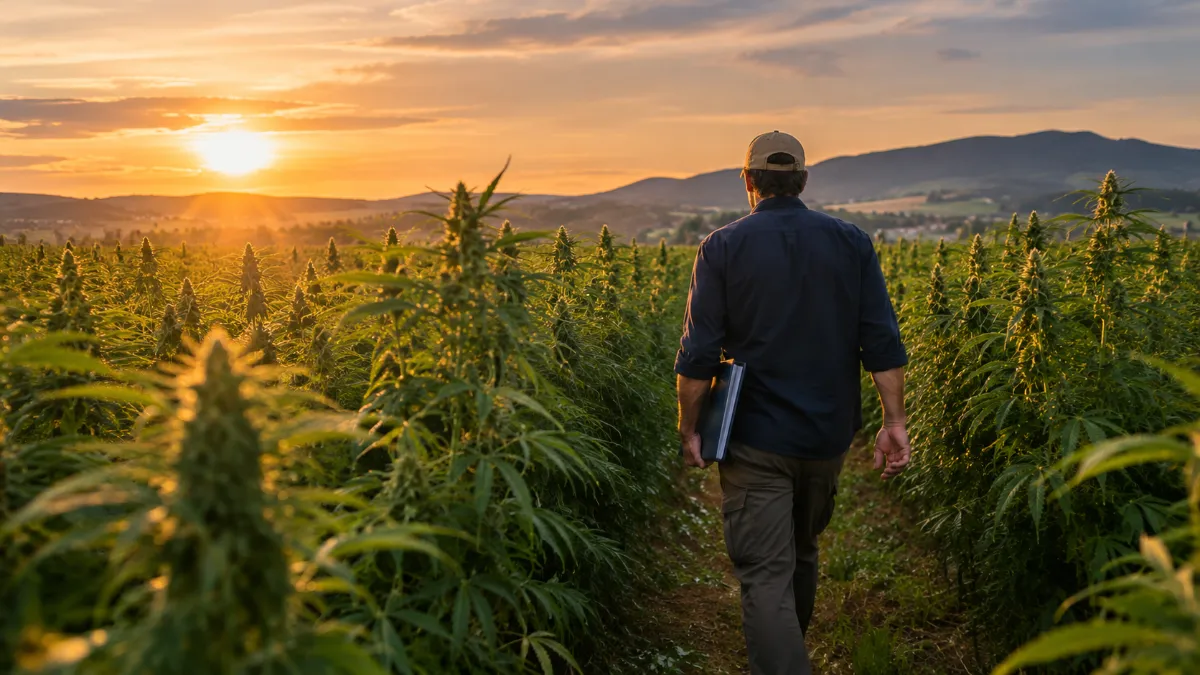
What seed and what THC limit does the law require for cultivating industrial hemp?
To cultivate industrial hemp in Spain without AEMPS authorisation, you must use certified seed of varieties listed in the EU Common Catalogue, with a THC content not exceeding 0.3% (limit in force since January 1, 2023, according to Regulation (EU) 2021/2115), and the crop must be intended exclusively for fibre, grain, or seed. Flowering tops remain a narcotic even if the variety is legal: they cannot be used for CBD without AEMPS authorisation. It is advisable to keep official labels and seed invoices for at least three years, do not multiply by cuttings, and maintain the crop until ten days after the end of flowering if CAP aid is claimed, to allow for official THC sampling.
Most legal problems in industrial hemp cultivation do not start at harvest or in the laboratory: they start the day the seed is purchased. A non-listed variety, a missing invoice, labels thrown in the trash, or a plot left to flower “to see what happens” are enough for a farmer to go from collecting CAP aid to explaining their field to the Civil Guard. In this guide, we explain what certified hemp seed is, how the THC limit works, what the Administration controls, and how to avoid problems in the field, with the expertise of Gabriela Sierra, a lawyer specialising in industrial hemp law.
Why the seed is the first proof that your crop is legal
Cannabis is a narcotic under the 1961 Single Convention and Law 17/1967, regardless of its THC content. The industrial hemp exception exists because both regulations exclude cultivation for industrial purposes, but this exception is not presumed: it must be proven. And the way to prove it starts with certified seed, which accredits the variety, its listing in the catalogue, and its maximum THC content. We explain the general framework in industrial hemp cultivation in Spain: legal framework and requirements; here we focus on the seed and THC.
The THC limit for industrial hemp in the European Union
The 0.3% limit applies to the variety and is verified in the field through sampling. Until 2022, the European threshold was 0.2%; since January 1, 2023, Regulation (EU) 2021/2115 raised it to 0.3% for direct payments, and the same value applies to raw hemp and seed for sowing imported into the Union.
“When a farmer calls me because their field has been inspected, my first question is always the same: do you have the bag labels and the invoice? If the answer is yes, the conversation is technical. If it is no, we start to reconstruct with whatever is available, and that is always more difficult and more expensive. Two papers that fit in a folder are worth more than any subsequent explanation.”
What exactly is a certified hemp seed
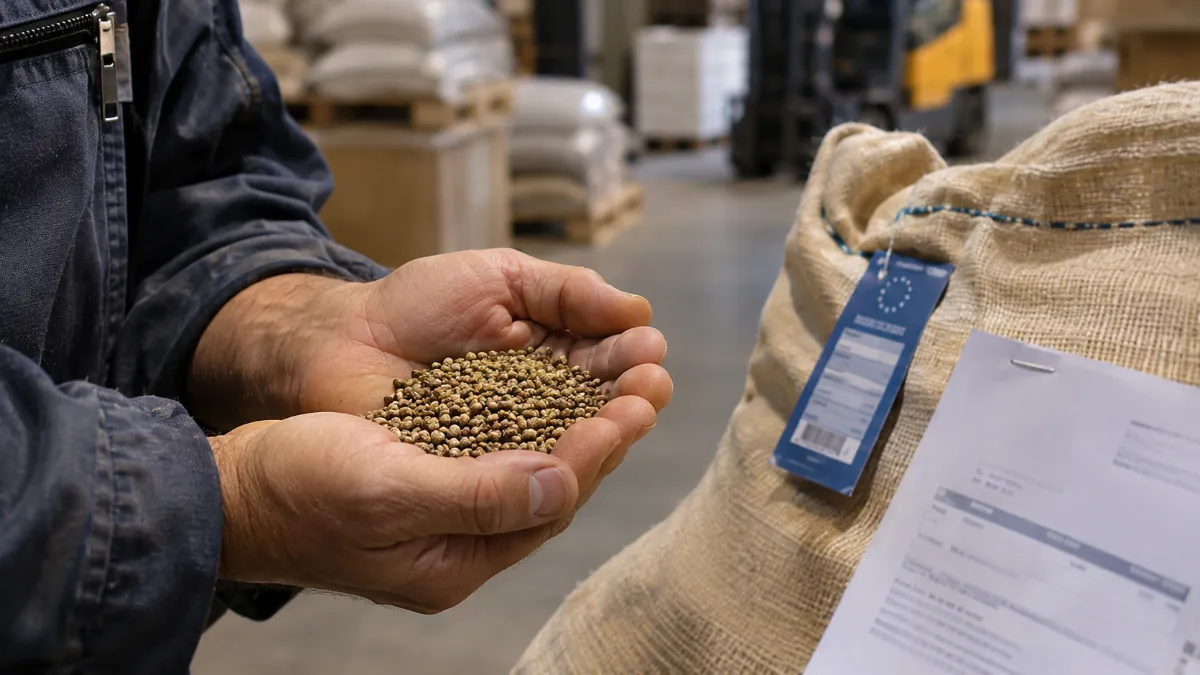
It is seed from a listed variety in the EU Common Catalogue of varieties of agricultural plant species (or with provisional marketing authorisation under Decision 2004/842/EC) that has passed the official certification process. In Spain, the production and certification of textile plant seeds is governed by Order ARM/3372/2010, and producers must be registered in the registry of Royal Decree 1891/2008.
Each bag carries an official label with the species, variety, category, and batch. That label, along with the supplier’s invoice, is what allows your plot to be linked to a legal variety.
Official labels and seals
Remove them carefully when opening the bags and keep them. They identify the variety, category, and batch.
Supplier invoice
With the variety and quantity. The Ministry recommends keeping invoices and labels for at least three years.
Farm registry
Registration in the registry of agricultural holdings (REGEPA, Royal Decree 9/2015) and LPIS (SIGPAC) location of the plot.
CAP declaration and destination
If you apply for aid, the crop declaration with the variety and seed documentation, and contracts proving the destination for fibre or grain.
What certified seed does not allow
Within the industrial hemp regime
- Outdoor cultivation of catalogued varieties with certified seed.
- Exclusive destination for fibre, grain, or seed.
- Grain products (oil, flour, protein) with THC within limits.
- Seed production by registered and certified producers.
Outside the regime (requires AEMPS or is prohibited)
- Using flowering tops, even for CBD extraction.
- Horticultural or greenhouse cultivation oriented towards the flower.
- Multiplying plants by cuttings or selling seedlings.
- Storing flowers: if grain or seed is not harvested, they must be destroyed.
The point that generates the most confusion is flowers. The Ministry of Agriculture states it bluntly in its informative note on hemp cultivation: flowering tops are a narcotic even if they come from an authorised variety, and they cannot be used for any purpose without AEMPS authorisation. We elaborate on the difference between CBD, THC, and hemp in legal differences between CBD, THC, and hemp, and the most recent criminal criteria regarding the flower in the Supreme Court ruling on CBD flowers. If your project does intend to obtain flowers or cannabinoids, the path is an AEMPS authorisation, which we explain in AEMPS licences for cannabis projects.
“What I see most is ill-informed good faith: farmers who have bought certified seed, who have done everything right during sowing and then, in August, someone convinces them that the flower ‘is also sellable’. That is the day the nature of the crop changes. My recommendation is simple: if your contract is for fibre or grain, the flower is not a by-product you can use. It is a risk you have to manage.”
From bag to harvest: where THC is controlled
Certified seed
Catalogued variety, official label, and invoice. No multiplication by cuttings.
Declaration
Farm registry and, if there is aid, CAP declaration with the variety.
Official sampling
THC control in the field according to Annex I of Delegated Regulation (EU) 2022/126.
Harvest permitted
The crop is maintained until ten days after the end of flowering for controls.
Destination and archiving
Delivery for fibre or grain, management of flowering tops, and document preservation.
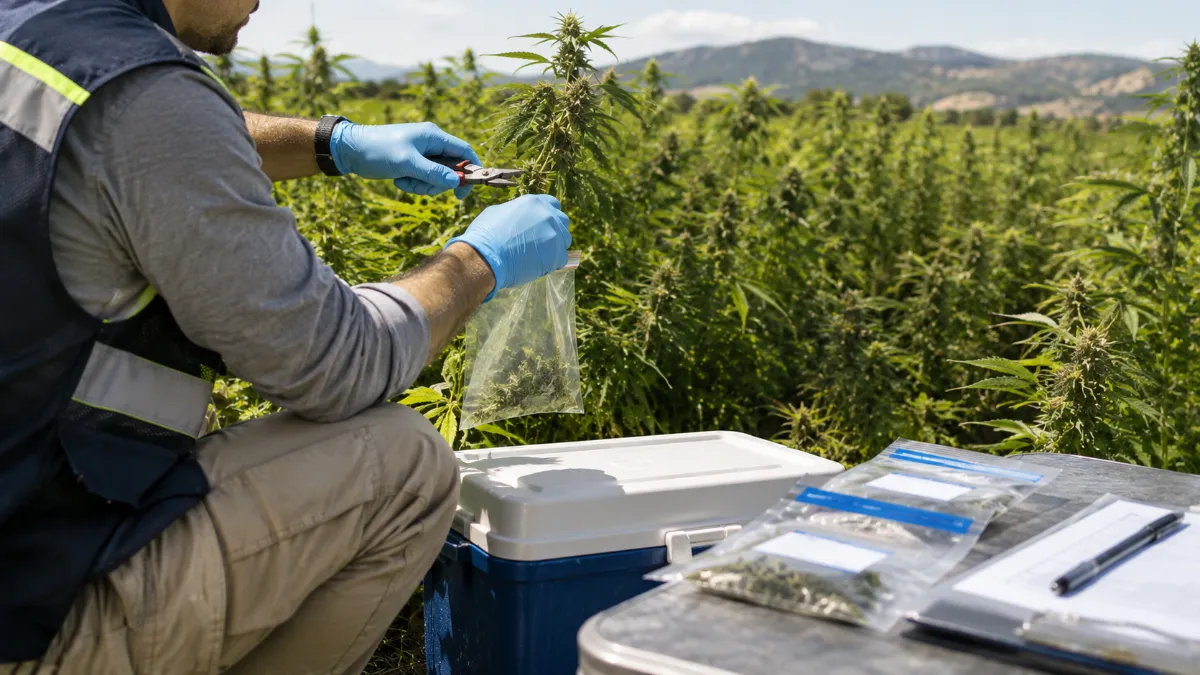
For those collecting CAP aid, Royal Decree 1047/2022 specifies the specific controls for hemp: payments are subject to the seeds being of varieties that meet the limit, crops must be maintained in normal growth conditions at least until ten days after the end of flowering to allow for controls, and the autonomous communities verify the THC content using the procedure in Annex I of Delegated Regulation (EU) 2022/126 and keep the results. Harvesting early can prevent control and put the aid at risk.
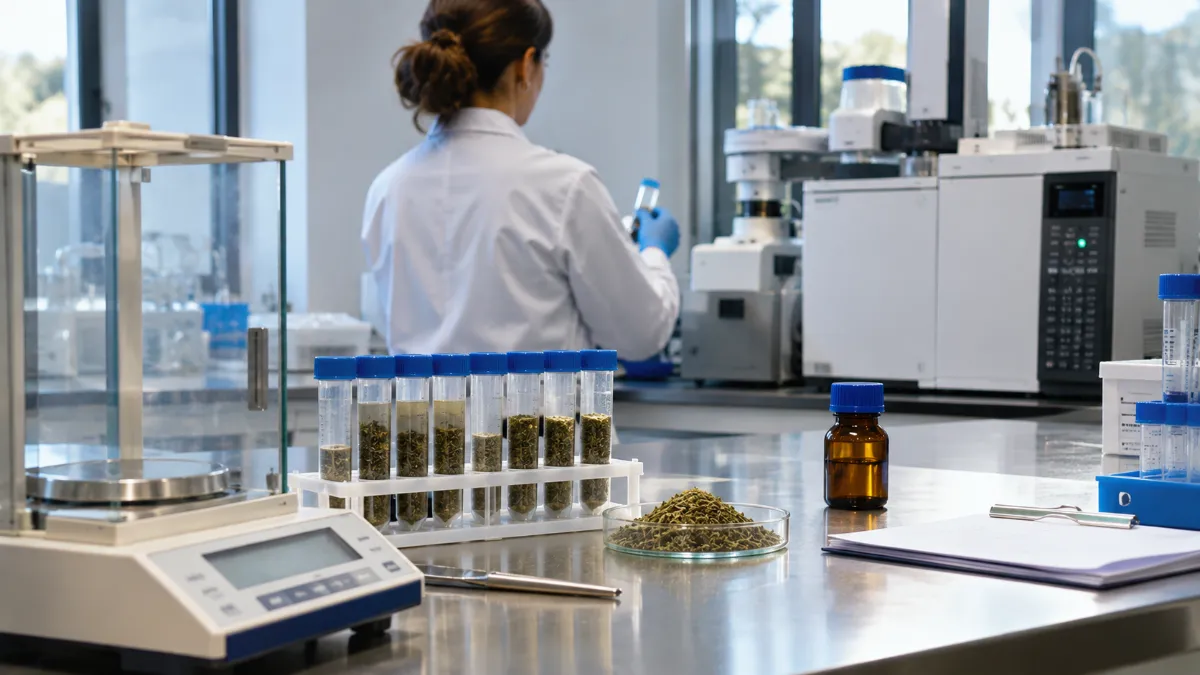
The legal calendar of a hemp campaign
Each phase of the cycle has an associated obligation. Having them on the calendar avoids the rush that leads to errors, especially at the end of the campaign.
| Phase | Typical timing | Legal obligation | What to keep |
|---|---|---|---|
| Planning | Winter, before buying seed | Choose catalogued variety and sign industrial destination | Contract with fibre or grain buyer |
| Purchase and sowing | Spring | Certified seed from authorised supplier; no cuttings | Invoices, labels, and photos of the bags |
| Declaration | Deadline for the CAP single application in your community | Declare plot, variety, and seed documentation | Proof of declaration |
| Flowering | Summer (usually between July and September) | Allow official THC sampling | Reports and control results |
| Harvest | At least ten days after the end of flowering, if there is aid | Deliver for fibre or grain; manage flowering tops | Delivery notes and proof of destruction |
| Closing | After delivery | Preserve campaign documentation | Complete folder, for at least three years |
Indicative calendar. CAP deadlines and flowering dates vary by autonomous community, variety, and area.
What happens if a hemp crop exceeds the permitted THC?
Exceeding 0.3% does not automatically make a field a crime, but it takes it out of the industrial hemp regime. The consequences depend on the variety, the documentation, and, above all, what has been done with the plant.
Field scenarios and legal exposure
General guidance. Each case depends on the documentation, the destination, and the specific circumstances.
Indicative reading prepared by Lawyer Sierra. It is not an opinion and does not replace the analysis of a specific case.
On the agricultural level, a result above the limit may mean the loss of aid for that plot and reinforced controls, and if a variety repeatedly exceeds the threshold, it may end up losing its status as admissible. On the criminal level, the risk appears when there is use of the flower or evidence of destination for consumption. If the situation has already led to a criminal investigation, we explain what happens in the first few hours in arrested for marijuana cultivation: penalties and defence.
“A high analysis is not a conviction, and I often say this to scared farmers. You have to look at how the sample was taken, at what point in the cycle, with which variety, and what was done with the plant afterwards. What does complicate things a lot is having stored flowers in a warehouse ‘just in case’. There, we are no longer discussing a percentage; we are discussing a destination.”
Four beliefs that cause problems in the field
“If the variety is legal, I can sell the flower as CBD.”
Flowering tops are a narcotic even if the variety is catalogued. Their use requires AEMPS authorisation.
“I can save seed from my harvest and replant.”
Sowing must be done with certified seed. Home-grown seed does not have the certification that accredits the variety.
“In a greenhouse, I control THC better.”
National regulations do not allow horticultural hemp cultivation, including greenhouse cultivation, within the industrial regime.
“Bag labels are useless.”
They are, along with the invoice, the first proof that the crop is industrial hemp. Keeping them for three years is the official recommendation.
If your field is inspected: what to do at the time
Identify the action
Agricultural control by the autonomous community or action by security forces: they do not have the same scope.
Show your folder
Labels, invoices, CAP declaration, and contract with the buyer. It is your best argument.
Review the report
Check how and when the samples are taken and record anything you do not agree with.
Call your lawyer
Especially if there is talk of flowering tops, stored flowers, or possible criminal proceedings.
Do not destroy plants or documentation after an inspection without advice: it may be interpreted against you.
What we see at Lawyer Sierra
“Farmers who have done everything right during sowing and lose their peace of mind at harvest because they are not clear on what to do with the flower. The decision on flowering tops is made in winter, not in August.”
“Take photos of the bags and labels before opening them and keep them with the invoice in the same digital folder. It seems like a minor detail; in an inspection, it is the first proof they ask for.”
Recommendations to avoid legal problems in the field
- Buy only from authorised suppliers. Demand certified seed of a catalogued variety and an invoice that identifies it.
- Archive labels and invoices. One folder per campaign, with photos of the bags and labels before opening them.
- Sign the destination before sowing. A fibre or grain contract proves industrial purpose better than any declaration.
- Respect control times. If you collect CAP aid, do not harvest before ten days after the end of flowering.
- Manage flowering tops. Define from the start what you will do with them and document their destruction when appropriate.
- Communicate and consult. The Ministry recommends informing the autonomous community, the town hall, and the security forces. Prior notice avoids misunderstandings.
Crop folder: what should always be at hand
- Official labels and seals from all seed bags.
- Supplier invoices with variety, batch, and quantity.
- Farm registration and LPIS (SIGPAC) references for the plots.
- CAP declaration for the campaign, if you apply for aid.
- Contract for sale or delivery of fibre or grain.
- Results of THC controls and analyses, if any.
- Proof of management or destruction of flowering tops.
- Communications to the Administration and security forces.
Frequently asked questions about certified seed and THC in hemp
What is a certified hemp seed?
It is seed from a variety listed in the EU Common Catalogue of varieties of agricultural plant species that has passed the official certification process. It is identified by the official label on the bag, which indicates species, variety, category, and batch, and accredits that the variety does not exceed 0.3% THC.
What is the THC limit for industrial hemp in Spain?
0.3% THC, in force since January 1, 2023, according to Regulation (EU) 2021/2115. Until 2022, the European limit was 0.2%. The content is verified in the field through official sampling according to Delegated Regulation (EU) 2022/126.
Do I need authorisation to cultivate industrial hemp?
You do not need AEMPS authorisation if you cultivate catalogued varieties with certified seed and the destination is exclusively fibre, grain, or seed. You must comply with agricultural regulations, register the farm, and, if you apply for aid, declare the crop in the CAP. If you want to use the flower or cannabinoids, you do need AEMPS authorisation.
How long should I keep the seed labels and invoices?
The Ministry of Agriculture recommends keeping invoices and seed labels or seals for at least three years. They are the first proof that the plot was sown with a legal variety.
What happens if my hemp crop exceeds 0.3% THC?
The plot no longer meets the conditions for industrial hemp and CAP aid, which may mean the loss of aid and reinforced controls. Criminal risk appears if flowers have been used or stored or if there is evidence of destination for consumption. It is advisable to review with a lawyer how the sample was taken and what documentation exists.
Can I sell hemp flower for CBD if the variety is legal?
Not without AEMPS authorisation. Flowering tops are considered a narcotic even if they come from a catalogued variety, and their use for any purpose, including CBD extraction, requires authorisation. If grain or seed is not harvested, they must be destroyed.
Can I multiply my hemp plants by cuttings?
No. National regulations do not allow vegetative multiplication of hemp within the industrial regime. Sowing must be done with certified seed.

Gabriela Sierra Fontecilla
Lawyer registered with the ICAB and specialised in cannabis law since 2012. Lecturer in the Cannabis Master’s at CannabisHub with the University of Barcelona. She supports farmers, cooperatives, and investors in industrial hemp projects.
Meet Gabriela Sierra →What this article is and is not
It is general legal information about certified seed, the THC limit, and industrial hemp controls in Spain as of November 2026, based on the cited European and Spanish regulations and the Ministry of Agriculture’s informative note.
It is not legal or agronomic advice, nor does it create a lawyer-client relationship. Each farm, variety, and campaign has its own circumstances, and agricultural regulations may be implemented differently in each autonomous community. Before sowing or if you have received an inspection, it is advisable to review your specific case.
It does not promote cannabis consumption. It refers to the industrial cultivation of hemp for fibre, grain, and seed. If you need guidance, at Lawyer Sierra we can study your project or situation.
A well-documented field is a peaceful field. Let’s review yours.
At Lawyer Sierra, we support farmers and hemp companies in campaign planning, contracts, compliance, and inspections, with specialised legal criteria.
Inquiries answered within a maximum of 48 hours. Headquarters at Av. Diagonal, 534, Barcelona (by appointment) and service throughout Spain.
Sources consulted
- Ministry of Agriculture, Fisheries and Food: informative note on the cultivation of hemp (Cannabis sativa ssp. sativa).
- Regulation (EU) 2021/2115, Article 4.4 (THC content of hemp varieties).
- Delegated Regulation (EU) 2022/126, Annex I (verification of THC content).
- Royal Decree 1047/2022, of December 27, specific controls for hemp.
- Order ARM/3372/2010 (certification of textile plant seeds), Royal Decree 1891/2008 (registry of seed producers), and Royal Decree 9/2015 (registry of agricultural holdings).
- 1961 Single Convention on Narcotic Drugs, Article 28, and Law 17/1967, Articles 8 and 9.