
CBD Product Registration · Food Route
Registration of CBD foods and supplements
A CBD oil for oral use, gummies or a food supplement are not registered by filling in a form: in the European Union, CBD is a novel food and requires an EU authorization that no product holds today. We help you understand what you can already sell, what you cannot, and how to prepare the way forward with legal certainty. Novel Food, supplements and hemp foods: what you can sell today with CBD and how to do it fully compliant.
How CBD food registration works in Spain
What you need to know before you manufacture, import or sell a CBD product meant to be ingested.
In Spain and throughout the EU, CBD and cannabis extracts intended to be ingested are a novel food under Regulation (EU) 2015/2283: they cannot be sold as food or as a food supplement until the European Commission authorizes the ingredient following an EFSA assessment. As of November 2026 no CBD has been authorized, although in February 2026 EFSA set a provisional safe intake level of about 2 mg per day for adults in high-purity CBD supplements.
What can be sold today are foods made from hemp seed (seeds, seed oil, flour, protein) that respect the THC limits, with their health registration, labeling and, for supplements, their notification of placing on the market. This page covers the food route; the other routes are explained in our CBD product registration service.
Register a CBD food or apply for a Novel Food authorization?
People searching for “CBD novel food registration” often mix up two different procedures. Separating them saves time and money.
“I register my company with the health authorities and I can start selling CBD oil for oral use.”
Your company’s health registration (RGSEAA) is mandatory, but it does not authorize ingredients. If the ingredient is an unauthorized novel food, the product cannot be marketed even if the company is registered.
“If I sell it as a food supplement, a notification is enough.”
A supplement notification reports that the product is being placed on the market, but it does not make an ingredient legal when that ingredient needs a Novel Food authorization. A CBD supplement without authorization may be withdrawn.
European Commission and EFSA
The Commission handles novel food applications and EFSA assesses their safety. If an authorization is granted, it is added to the Union list together with its conditions of use.
AESAN
The Spanish Agency for Food Safety and Nutrition coordinates food safety in Spain, the General Health Register of Food Businesses and Foods and inquiries about novel food status.
Autonomous communities
They receive supplement notifications, register companies and inspect the market: physical stores, online shops and social media.
CBD as a Novel Food: the real situation
A short timeline to understand why no CBD oil is authorized as food in the EU today, and what has changed this year.
Source: EFSA, updated statement of February 9, 2026 and webinar of April 2026.
The starting point: Regulation (EU) 2015/2283
A novel food is any food that was not consumed to a significant degree in the EU before May 15, 1997. The Commission’s Novel Food Catalogue lists Cannabis sativa extracts and cannabinoids as novel foods, while hemp seed and its derivatives have a history of consumption.
2022: EFSA puts its assessments on hold
EFSA’s Panel on Nutrition, Novel Foods and Food Allergens (NDA) identified data gaps on the effects of CBD on the liver, the gastrointestinal tract, the endocrine system and reproduction, and paused the assessments until applicants provided more information.
February 2026: provisional safe intake level
On February 9, 2026, EFSA set a provisional level of 0.0275 mg per kilogram of body weight per day (about 2 mg per day for a 70 kg adult), applicable only to supplements with CBD of 98 % purity or higher, without nanoparticles and made with a safe production process. It is not an authorization: it is a reference for the assessments under way.
More than 200 applications, no authorizations
According to EFSA itself, the Commission has received more than 200 dossiers for CBD as a novel food; 17 have reached risk assessment (15 for extracted CBD and 2 for synthetic CBD) and the opinions adopted up to April 2026 have been negative.
THC limits in hemp foods
Since 2023, EU contaminants legislation has set maximum THC levels for hemp seed derivatives: 3.0 mg/kg in seeds, flour and protein and 7.5 mg/kg in seed oil. Products that exceed them cannot be marketed.
What you can sell today and what you cannot
The status depends on the ingredient and the part of the plant it comes from, not on what you call the product on the label.
Can be marketed
- Hemp seeds, hulled or whole, flour and protein, with THC within the 3.0 mg/kg limit.
- Pressed hemp seed oil, with THC within the 7.5 mg/kg limit.
- Foods and supplements made from those derivatives, with a registered company, correct labeling and notification for supplements.
Cannot be marketed today
- CBD oils for oral use, capsules or sublingual sprays sold as food or supplements.
- Gummies, chocolates, drinks or infusions containing CBD extract or the plant’s flowers and leaves.
- Any food with isolated or synthetic CBD as long as no Union authorization covers it.
An important warning: labeling a CBD oil as “for external use” or as a “collector’s item” to get around food law does not change its nature if it is presented or used to be ingested. We analyze this in Novel Food and CBD: why you cannot sell CBD oils for consumption.

“The question stores ask me most is whether they can sell CBD oil ‘like everyone else.’ My answer is that what everyone else does is not a legal criterion. When the inspection arrives, the company answering for it is the one with the product on its shelf, not the competition.”
Gabriela Sierra · Lawyer specializing in cannabis and CBD lawCan I sell my CBD product as a food or supplement?
Three questions we always ask before talking about procedures.
What we see at Lawyer Sierra with CBD food products
Patterns that repeat in the catalog audits and inspections we handle.
“Stores with a flawless cosmetics catalog and, on the same shelf, oils for oral use that should not be there. The problem is rarely the store itself: it is not having separated the routes from the start.”
“Since EFSA’s provisional reference in 2026, we receive inquiries from brands that believe they can already sell. That is not the case: a safety reference is not an authorization. The responsible approach is to prepare the product and the dossier, not to jump ahead.”
“Split your catalog by route (food, cosmetic, other) and review every product page on your website as if it were a label. It is the exercise that prevents the most problems in an inspection.”
Which one is your case?
Your obligations change depending on your role. These are the situations we handle most often on the food route.
Manufacturer or brand of hemp foods
You make or commission products with hemp seed, seed oil, flour or protein.
- Registration in the RGSEAA or the regional register, depending on the activity.
- Batch THC testing with laboratory analysis.
- Labeling and, for supplements, notification of placing on the market.
Company seeking an authorized CBD
You want to bring a CBD ingredient to the European food market through the proper route.
- Novel Food application strategy or joining a consortium.
- Composition, production and toxicology data in line with EFSA requirements.
- Realistic planning with no timeline promises.
Store or e-commerce
You sell third-party products and want to know what you can keep in your catalog.
- Catalog audit: which products are unauthorized novel foods.
- Review of product pages, website and social media to remove health claims.
- Supplier documentation ready for inspection, as we explained in inspection at a CBD store.
The most common mistakes with CBD foods
All of them are avoidable. Most come from trusting the supplier’s product sheet or copying what the competition sells.
- Selling sublingual CBD oil as a food supplement, or labeled “for external use” while the website explains how to take it.
- Attributing health benefits to the product (“helps you sleep,” “reduces anxiety”): no health claim is authorized for CBD.
- Marketing seed derivatives without batch THC testing that proves compliance with the limits.
- Selling without the company’s health registration or without notifying the supplement to the competent authority.
- Importing ingredients from outside the EU without checking their Novel Food status or their documentation of origin.
- Relying on a generic supplier certificate of analysis that does not match the batch being sold.
The rules for what you say about your product
Regulation (EC) 1924/2006 only allows the nutrition and health claims included in the Union list, and none of them refers to CBD. A hemp food may highlight its protein or fatty acid content if it meets the conditions; what it cannot do is promise effects on sleep, stress or pain. That promise can also push the product toward the borderline with medicines.
“In the catalog audits we carry out, the problem is almost never a single product: it is the website copy. Product pages describing benefits, featured reviews that talk about effects, social media posts. For the inspection, all of that is part of how the product is presented.”
Gabriela Sierra · Lawyer specializing in cannabis and CBD lawHow we handle the registration of your foods and supplements
As part of our support for companies in the CBD sector, this service covers the food route from start to finish.
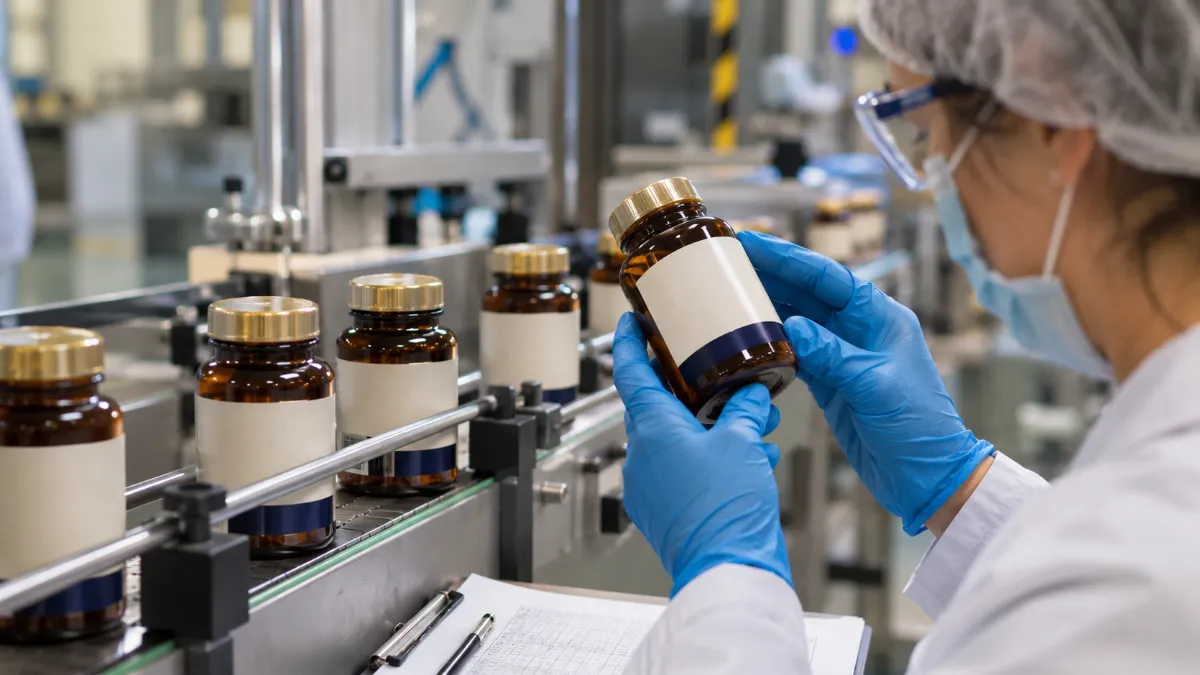
- Status assessment: which ingredients are novel foods, which have a history of consumption and which products can be sold today.
- Registration and notifications: the company’s health registration and notification of placing supplements on the market.
- Labeling and claims: legal review of packaging, website, marketplace and social media before publishing.
- Novel Food strategy: analysis of the authorization route, consortia and EFSA requirements for CBD projects.
- After launch: requests for information, alerts, withdrawals and inspections, with you.
Assessment
Product, ingredient, supplier and sales channel: which regime applies to you.
Compliance
Reformulation if needed, THC testing and supplier documentation.
Procedures
Health registration, supplement notification and compliant labeling.
Monitoring
Regulatory changes from EFSA and the Commission, requests for information and inspections.
Food, cosmetic or medicine: which regime applies to your product
The same ingredient can fall under very different regimes depending on how it is presented and what it is used for. This comparison helps you place each product.
| Route | Use | CBD status | Main obligations | Authority |
|---|---|---|---|---|
| Food or supplement | Ingested | Novel Food for CBD; hemp seed within THC limits | Health registration and supplement notification; no health claims | AESAN and autonomous communities |
| Cosmetic | Applied to the skin | Synthetic CBD or CBD from seeds and leaves; plant extracts prohibited | Safety assessment, responsible person and CPNP notification | European Commission, AEMPS and autonomous communities |
| Medicine or compounded formula | Treat or prevent disease | Registered standardized preparations (Royal Decree 903/2025) or authorized medicines | GMP manufacturing, AEMPS registration and hospital use | AEMPS and hospital pharmacy services |
An indicative comparison. For the cosmetic route see CBD cosmetics registration and, for the medical route, our AEMPS license guide.
Services for your business that you can book online
Get started right away: a consultation with Gabriela, a contract review or drafting, or a written assessment of your case.
- Secure payment processed by Stripe
- Prices include VAT
- Official law firm invoice provided upon payment
- Professional secrecy and confidentiality
Initial legal consultation
Up to one hour with Gabriela Sierra to review your situation, address your legal questions, and outline the next steps.
- Consultation of up to 1 hour
- With Gabriela Sierra, lawyer registered with the ICAB
- Assessment of next steps
Review or drafting of simple contracts
Review of a contract of up to five pages or drafting of a new agreement based on your agreed terms.
- Two-party agreements with a single scope
- Contracts up to 5 pages
- Includes one brief round of revisions
Custom written consultation
Share the details of your case and receive an initial written assessment with our recommended steps.
- Initial assessment of your case
- Recommended next steps
- Option to attach a document of up to 2 pages
Brief written consultation
One specific legal question and a concise written answer, suitable for queries that do not require document review.
- One specific question
- Written response
- Document review not included
- 1Select your service and pay securely via Stripe.
- 2The firm receives payment and contacts you to coordinate the service.
- 3You receive an invoice from Lawyer Sierra by email.
If your matter does not fit into any of these options, contact us and we will prepare a tailored proposal. View all services available online
Frequently asked questions about CBD food registration
These answers are general guidance: every product and every company requires its own analysis.
Can CBD oil for oral use be sold in Spain?
Not as a food or as a food supplement. CBD intended to be ingested is a novel food under Regulation (EU) 2015/2283 and requires an authorization from the European Commission following an EFSA assessment. As of November 2026 no CBD has been authorized as a novel food in the EU.
What is CBD Novel Food registration?
It is the application for authorization of a novel food submitted to the European Commission. It includes a dossier with data on composition, production process, specifications, proposed use and safety studies, which EFSA assesses. If the assessment is favorable, the Commission adds the ingredient to the Union list with its conditions of use.
What did EFSA say about CBD in 2026?
On February 9, 2026, EFSA set a provisional safe intake level of 0.0275 mg per kilogram of body weight per day, about 2 mg per day for a 70 kg adult, applicable only to supplements with CBD of 98 % purity or higher, without nanoparticles and made with a safe production process. It is not an authorization but a reference for the assessments under way.
Can I sell foods made with hemp seed?
Yes. Hemp seed and its derivatives, such as seed oil, flour or protein, have a history of consumption and are not novel foods. They must meet the THC limits set by contaminants legislation (3.0 mg/kg in seeds, flour and protein and 7.5 mg/kg in oil), and the company must be registered and label its products correctly.
How is a food supplement notified in Spain?
The responsible company notifies the competent authority of the first placing of the supplement on the market, providing a model of the label, in accordance with Royal Decree 1487/2009. The notification does not authorize ingredients: if the supplement contains an unauthorized novel food, such as CBD, it cannot be marketed.
Can I say that my hemp product helps you sleep or relax?
No. Only the health claims authorized in the Union list may be used, and none of them refers to CBD. Attributing effects on sleep, stress or pain breaches Regulation (EC) 1924/2006 and may lead to the product being withdrawn.
Your food product, on the right side of the law
Tell us what product you have or want to launch and where it stands: we review the ingredient, labeling and procedures, and give you a clear plan. Initial assessment with no obligation, as part of our CBD product registration service.
Registered with the ICAB · In the cannabis sector since 2012 · Companies throughout Spain

Gabriela Sierra Fontecilla
Lawyer registered with the Barcelona Bar (ICAB), specializing in cannabis law since 2012. Lecturer on the CannabisHub Cannabis Master’s program with the University of Barcelona and a participant in the sector’s collective regulatory initiatives. She advises manufacturers, brands and stores selling CBD products on how they fit within European and Spanish regulations.
Meet Gabriela Sierra →The content of this page is for information purposes only and does not constitute legal advice. The regulation of CBD as a novel food is evolving, so specific obligations must be checked for each product and each company at the time of launch, and no decision should be made without individual professional advice. Nothing on this page promotes cannabis use or should be read as an invitation to market any product without complying with the regulations in force. The images on this page are illustrative recreations generated with the help of artificial intelligence. Information updated as of November 2026.